
Becoming the Church Young Families Hope Exist
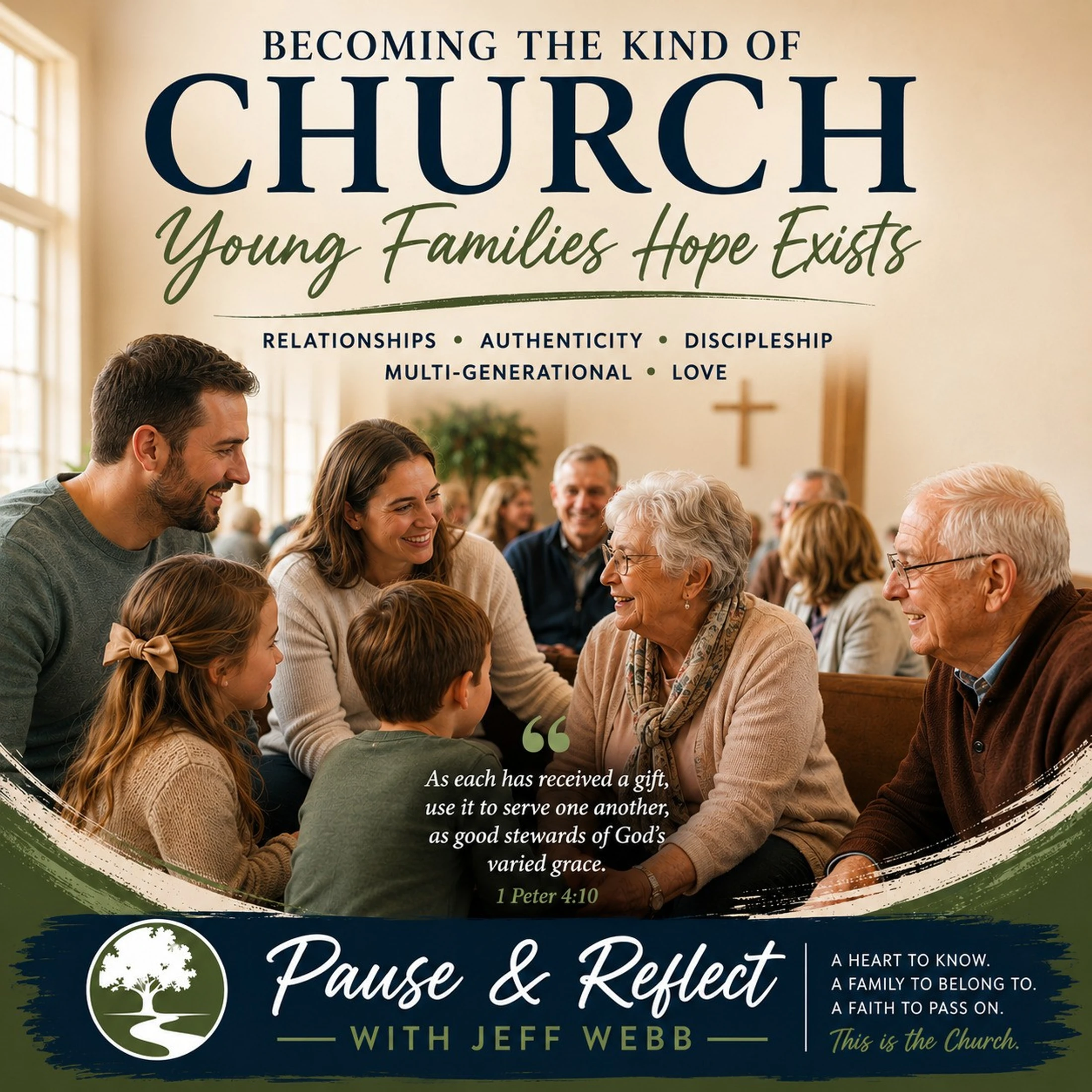
Walk into almost any gathering of church leaders today, and before long the conversation will turn to a familiar concern:
"How do we attract young families?"
The question is understandable. Many churches are aging. Attendance patterns have changed. The cultural influence of Christianity has diminished. Parents are increasingly disconnected from church life, and children are growing up in a world that often seems hostile to biblical values.
In response, churches often begin discussing programs, facilities, websites, social media strategies, coffee bars, playgrounds, and children's ministries. While those things certainly have their place, they may not address the deeper issue.
Perhaps the better question is not, "How do we attract young families?"
Perhaps the better question is:
"Are we becoming the kind of church young families hope exists?"
The answer to that question has far less to do with marketing and far more to do with discipleship.
Young Families Need Relationships More Than Programs
Today's young families are often living under tremendous pressure.
Many are navigating financial challenges, busy schedules, strained marriages, parenting anxieties, and cultural confusion. Some are raising children hundreds of miles away from grandparents and extended family. Others are trying to navigate the Christian faith with little support or encouragement.
What they need most is not another activity on their calendar. Activities and events get them to church, but what to they need once they arrive?
They need relationships.
In the early church, believers were devoted to one another. Luke records that they "devoted themselves to the apostles' teaching and the fellowship" (Acts 2:42). Their shared life became one of the most powerful testimonies to the reality of the gospel.
The church was never intended to be a weekly event. It was intended to be a spiritual family.
When a young family visits a church, they are not merely evaluating the music or the nursery. They are asking deeper questions:
"Will anyone know my name?"
"Will anyone care about my children?"
"Will anyone walk beside us when life becomes difficult?"
Programs attract attention, but relationships build belonging.
Many families stay where they find genuine friendship, encouragement, and support. They stay where people notice when they are absent, celebrate when they are joyful, and pray when they are hurting.
In many cases, children may come because of a nursery or a children's ministry.
Families stay because they found a family.
Young Families Want Authentic Faith
One of the defining characteristics of younger generations is a growing skepticism toward institutions.
Many have watched public scandals, religious hypocrisy, and empty promises. They have become wary of appearances.
What they long for is authenticity.
The Apostle Paul instructed believers to practice genuine love, writing, "Let love be genuine" (Romans 12:9).
Young families are not looking for perfect Christians.
They are looking for honest ones.
Can people admit they struggle?
Can they acknowledge their failures?
Can they ask difficult questions without fear of judgment?
Can they find grace while they are still growing?
The gospel itself creates this kind of culture. Every believer stands before God not as someone who has earned acceptance, but as someone who has received mercy through Jesus Christ.
Churches become welcoming when they remember that truth.
The church is not a museum for saints.
It is a hospital for sinners and a training ground for disciples.
Families are often drawn to communities where humility, grace, and truth coexist.
One of Our Greatest Strengths May Be Sitting in the Pew
Many churches with older congregations quietly assume they are at a disadvantage when it comes to reaching younger families.
Scripture suggests otherwise.
One of the greatest gifts an older church can offer is something younger churches often struggle to provide: spiritual maturity.
Paul instructed older men and women to actively invest in younger generations (Titus 2:1-8). This was not an optional ministry. It was God's design for the health of His church.
Young parents today desperately need examples of faithful Christian living.
They need to see marriages that have endured hardship.
They need to hear stories of God's faithfulness through decades of trials.
They need wisdom that cannot be downloaded from the internet or learned from a podcast.
Many young families live far from biological grandparents.
The church has an opportunity to become something extraordinary: a family made up of spiritual mothers, fathers, grandparents, brothers, and sisters.
This is one reason the New Testament repeatedly describes believers as members of one household (Ephesians 2:19).
A congregation filled with seasoned saints is not a weakness to overcome.
It is a treasure to steward.
Children Need to See the Church
Modern ministry often segments everyone by age and life stage.
While age-specific ministries can be helpful, they can never replace the beauty of seeing the entire body of Christ worshiping together.
Children need to witness older believers praying.
They need to hear men and women singing with conviction.
They need to watch people serve one another.
They need to observe what faithfulness looks like over a lifetime.
Paul describes the church as one body with many members (1 Corinthians 12:12-27). Every generation contributes something necessary to the health of the whole.
When children grow up seeing Christianity practiced by people of all ages, they begin to understand that following Jesus is not merely a phase of life.
It is a lifelong calling.
One of the greatest gifts a church can give a child is the opportunity to see mature believers walking faithfully with Christ year after year.
Excellence Matters, But Love Matters More
None of this means practical considerations are unimportant.
Church facilities should be clean.
Nurseries should be safe.
Volunteers should be trained.
Visitors should be able to find their way around.
Excellence honors both God and people.
Yet Scripture consistently reminds us that love is what ultimately distinguishes Christ's followers.
Jesus said:
"By this all people will know that you are my disciples, if you have love for one another" (John 13:35).
Visitors rarely remember the color of the carpet.
They remember whether anyone spoke to them.
They remember whether someone greeted their children.
They remember whether they felt welcomed or ignored.
The most attractive churches are often not the most impressive churches.
They are the most loving churches.
The Real Goal
At the end of the day, the goal is not simply to increase attendance or lower the average age of the congregation. Those come as a natural by-product of an environment where Christs love is tangible.
The goal is to faithfully reflect the heart of Christ.
The church exists to make disciples, shepherd believers, and proclaim the gospel.
When we focus on becoming a healthy biblical church, many of the things we worry about begin to take care of themselves.
Young families are not ultimately searching for bigger programs.
They are searching for hope.
They are searching for truth.
They are searching for community.
They are searching for a place where their children can grow to know and love Jesus Christ.
And perhaps most of all, they are searching for a church that feels like family.
If we become a church where people are known, loved, prayed for, discipled, and shepherded, we will become increasingly attractive—not because we are trendy, but because we are biblical.
And in a culture filled with isolation, confusion, and uncertainty, a genuine spiritual family may be one of the most compelling witnesses the church can offer.
After all, that is what the church was always meant to be.