Stones of Rememberance
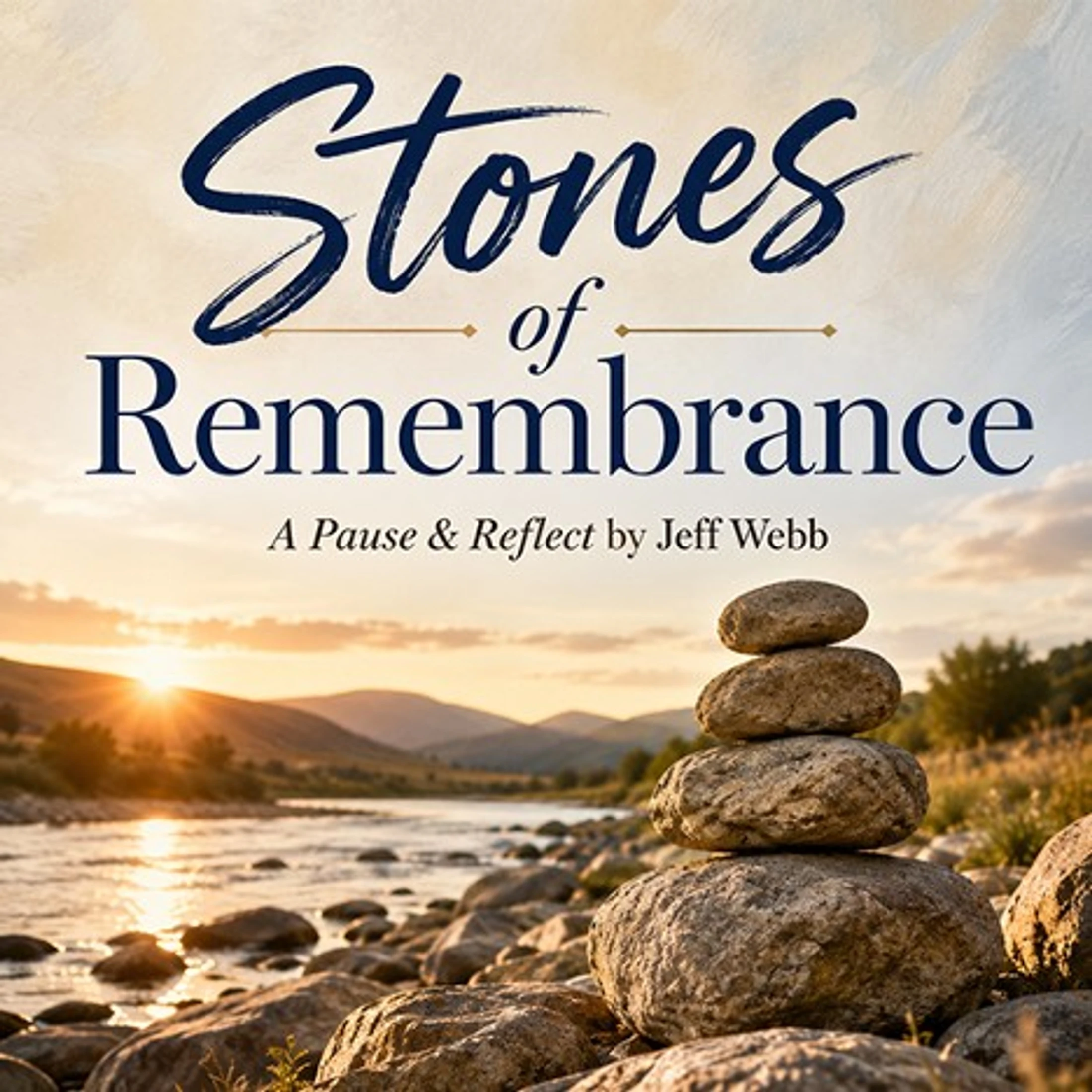
Why We Should Record the Faithfulness of God
There are moments in our lives we are certain we will never forget.
The moment we first understood the Gospel.
The moment we surrendered our life to Christ.
The first time we recognized that quiet prompting of the Holy Spirit and realized, God is speaking to me.
The prayer that seemed impossible—until God answered it.
The provision that arrived at precisely the right time.
The door God unexpectedly opened.
Or closed.
The person He brought into our life.
The season He carried us through when we were not sure we could take another step.
The healing.
The rescue.
The correction.
The unmistakable moment when, looking back, we realized:
God was there.
We tell ourselves we will never forget those moments.
But we do.
Not necessarily completely. They simply begin to fade. Details disappear. What once seemed astonishing gradually becomes part of the background of our lives.
Perhaps that is one reason Scripture so often tells the people of God to remember.
Twelve Stones
When Israel finally crossed the Jordan River into the Promised Land, God did something interesting.
Before they continued their journey, He told Joshua to choose twelve men, one from each tribe, and have each man take a stone from the middle of the Jordan.
Those stones were carried to their camp and arranged as a memorial.
Why?
Joshua explained:
“When your children ask in time to come, ‘What do those stones mean to you?’ then you shall tell them that the waters of the Jordan were cut off before the ark of the covenant of the LORD.” —Joshua 4:6–7
God wanted His people to remember what He had done.
But notice something else.
The stones weren't merely for them.
They were for their children.
Someday a little boy or girl would see those strange stones and ask:
“Why are those there?”
And a parent or grandparent would have the opportunity to say:
“Let me tell you what God did.”
That is what a testimony really is.
It is a stone of remembrance.
We Are Surprisingly Good at Forgetting
One of the recurring tragedies of Scripture is how quickly God's people forgot His faithfulness.
They saw the Red Sea divide.
Then they worried about water.
God provided water.
Then they worried about food.
God provided manna.
Then they worried about their enemies.
Again and again, yesterday's miracle seemed incapable of sustaining tomorrow's faith.
The problem wasn't that God had stopped being faithful.
They had forgotten how faithful He had already been.
That is why the Psalms repeatedly rehearse the works of God:
“I will remember the deeds of the LORD; yes, I will remember your wonders of old.” —Psalm 77:11
Remembering God's faithfulness is not nostalgia.
It is fuel for faith.
When I remember what God has already done, I am reminded of who God has always been.
The God who was faithful then is the God who is faithful now.
Your Salvation Story Matters
Perhaps the most important story you can record is the story of how you came to know Christ.
Do you remember who first told you about Jesus?
Do you remember when the Gospel finally made sense?
Was there a particular sermon?
A Sunday School teacher?
A parent?
A friend?
A crisis?
A quiet moment alone with God?
Maybe your conversion was dramatic.
Maybe it wasn't.
Paul's certainly was. He was confronted by the risen Christ on the road to Damascus.
Interestingly, Paul tells that story repeatedly.
Luke records Paul's conversion in Acts 9, and Paul recounts it again in Acts 22 and Acts 26.
Paul apparently never grew tired of telling the story of what Jesus had done for him.
And neither should we.
You may think your salvation story is ordinary.
There is nothing ordinary about a sinner being reconciled to God.
But There Are Other Stories Too
Our testimony does not end with salvation.
If you have walked with Christ for very long, you have accumulated stories.
Stories of provision.
Stories of protection.
Stories of answered prayer.
Stories of unexpected grace.
Stories of God's discipline.
Stories of His guidance.
Stories of doors He opened—and perhaps stories of doors you were once angry that He closed.
There may be stories of physical healing.
There may also be stories when God did not heal, but somehow gave you strength to endure.
There may be a time when Scripture suddenly came alive and God showed you something you desperately needed to understand.
There may have been a moment when the Holy Spirit impressed something so strongly upon your heart that you knew you needed to act.
Perhaps God brought someone into your life at exactly the right moment.
Perhaps He provided financially when you couldn't see how the need would be met.
Perhaps He rescued a marriage.
Restored a relationship.
Changed the direction of your life.
Called you into ministry.
Protected you from a decision that would have harmed you.
Or carried you through grief when you wondered whether joy would ever return.
Some of God's greatest works in our lives don't look spectacular from the outside.
But we know what happened.
We know where we were.
We know what we prayed.
And we know what God did.
Those stories are worth remembering.
Write Them Down
This is where I want to encourage us to recover an old spiritual practice.
Write down the stories of God's faithfulness in your life.
They don't have to be beautifully written.
You don't need to be a theologian.
You don't even need to consider yourself a writer.
Simply tell the truth.
Here is what happened.
Here is what I prayed.
Here is what God did.
Here is what I learned about Him.
Samuel once erected a stone after God delivered Israel from the Philistines.
He called it Ebenezer, saying:
“Till now the LORD has helped us.” —1 Samuel 7:12
Imagine creating a collection of personal Ebenezers.
A notebook.
A journal.
A document on your computer.
A folder containing stories of God's faithfulness.
Over the years it could become one of your most treasured possessions.
Because there will probably come a day when you need to read your own testimony.
There may come a day when life becomes difficult and you wonder where God is.
Open the book.
Read the stories.
And remind yourself:
Till now the LORD has helped me.
Your Children May Need Those Stories Too
There is another reason to record them.
Someday someone else may need them.
Psalm 78 describes the responsibility of one generation to tell another what God has done:
“We will not hide them from their children, but tell to the coming generation the glorious deeds of the LORD, and his might, and the wonders that he has done.” —Psalm 78:4
What an inheritance.
We spend enormous amounts of time thinking about what we will leave our children and grandchildren.
Possessions.
Photographs.
Money.
Family heirlooms.
But what if one of the greatest things we could leave them was a collection of stories that said:
Here is how God was faithful to our family.
Your grandchildren may someday face something you cannot imagine.
And perhaps, long after you are gone, they will read your words:
I didn't know what God was doing either.
I was frightened too.
I prayed.
I waited.
And this is what God did.
Suddenly your testimony becomes more than a memory.
It becomes ministry.
Tell Your Story
That's one reason we're beginning something new in Connected.
I would love for us to begin collecting and sharing our own stories of God's faithfulness.
Not because every story will involve a spectacular miracle.
And certainly not because we want to draw attention to ourselves.
Quite the opposite.
A Christian testimony ultimately says:
“Look what God has done.”
Perhaps you could tell us about how you came to Christ.
Perhaps it was an answered prayer.
A healing.
An unexpected provision.
A moment when God redirected your life.
A time when you distinctly recognized His leading.
A season when He sustained you through suffering.
Or simply one of those moments when God's presence and faithfulness became unmistakably real to you.
Tell us the story.
Because somebody else may need to hear it.
Someone struggling today may need to know that God has carried another believer through something similar.
Someone questioning God's provision may need to hear how He provided for you.
Someone praying for a child may need encouragement from your story.
Someone who wonders whether God still changes lives may need to hear how He changed yours.
Revelation describes God's people overcoming “by the blood of the Lamb and by the word of their testimony” (Revelation 12:11).
Notice the order.
First, what Christ has done.
Then, the story we tell about it.
Our testimonies never replace the Gospel.
They point to it.
Pick Up a Stone
So perhaps this week, take a little journey through your own life.
Ask the Holy Spirit to help you remember.
Where has God met you?
Where has He carried you?
Where has He corrected you?
Where has He provided?
Where has He healed?
Where has He protected?
Where has He unmistakably made Himself known?
And especially:
How did Jesus find you?
Then pick up a stone.
Write it down.
Tell your children.
Tell your grandchildren.
Tell your church family.
Because someday someone may ask:
“What does this stone mean?”
And you will have the wonderful privilege of answering:
“Let me tell you what God did.”